When someone gives you a compliment, a gift, or their full attention, what happens inside you?
For some people it lands as warmth. For others it brings suspicion, guilt, or an urge to change the subject, even when the person clearly means well.
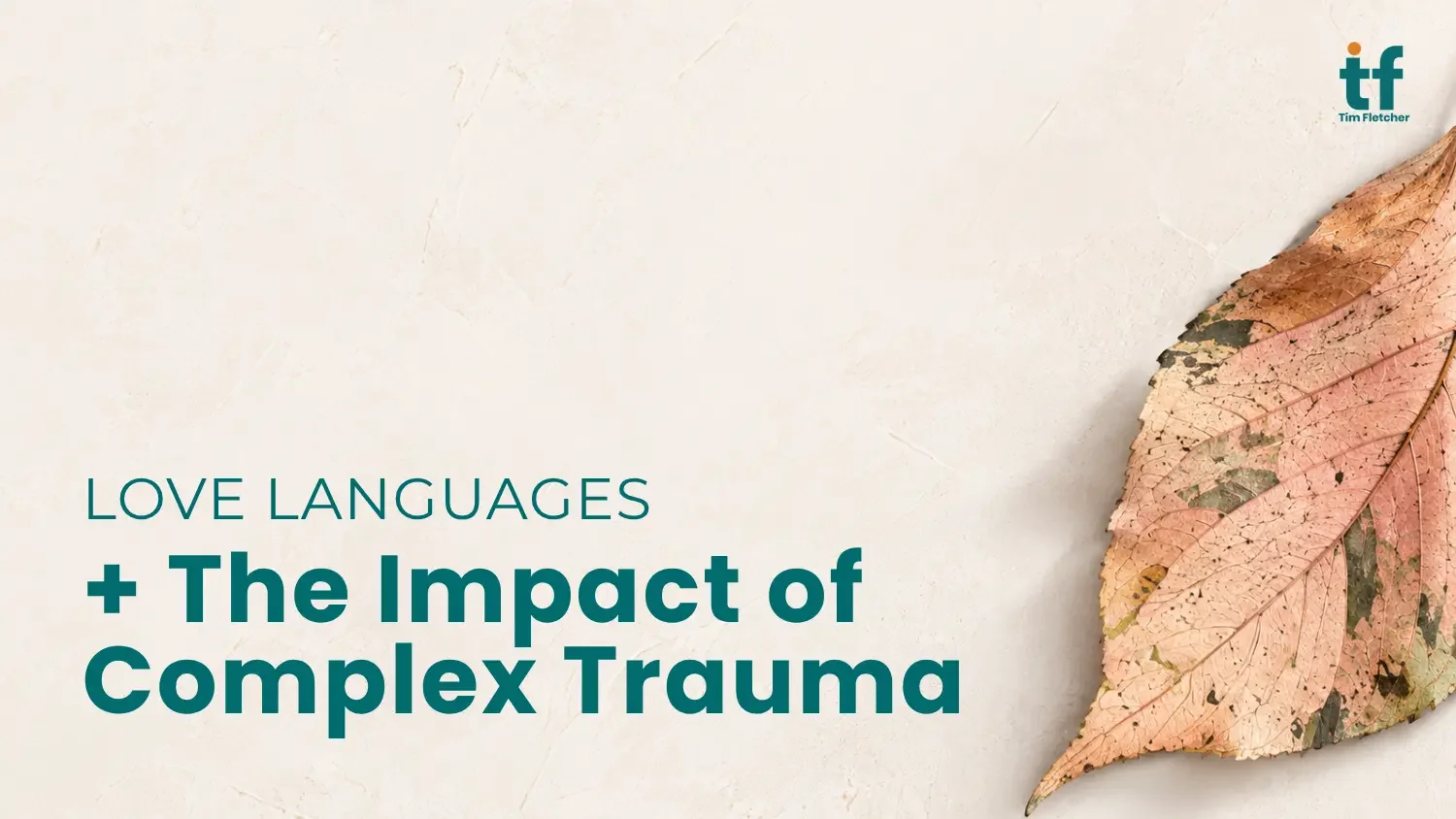
In this course, you’ll look at the five love languages (Words of Affirmation, Quality Time, Acts of Service, Receiving Gifts, and Physical Touch) through the lens of Complex Trauma. You’ll explore how love that was conditional, inconsistent, or absent in childhood can twist each one, and how attachment patterns and nervous system survival states shape the way you chase, avoid, or experience connection. You’ll also learn why fear and attraction can feel so similar in the body, and how to tell a love language apart from a trauma language.
You’ll practice setting boundaries alongside small, chosen relational risks, receiving love without feeling you owe something back, and giving freely instead of giving to stay safe. The course also covers repair after conflict and ways to offer yourself care in all five love languages, including through your inner child. Along the way you’ll build the ability to recognize healthy love and stay connected to yourself while you connect with someone else.
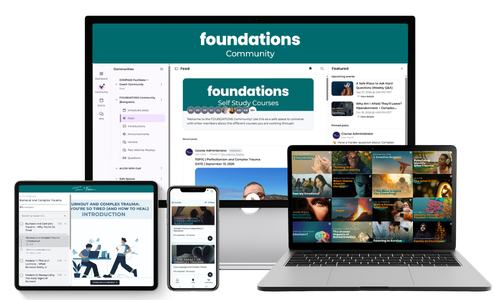
Get access with a Foundations Library membership.
Get unlimited access to Tim Fletcher Co’s Foundations library for just $30 per month, or $300 per year. With new self-development courses added every month, you’ll always have fresh, practical tools to support your growth in areas like trauma recovery, boundaries, relationships, and personal transformation. Learn at your own pace, revisit lessons anytime, and build lasting change with guidance that’s both compassionate and deeply practical. See more details here.
*All prices are in Canadian Dollars.
Course Curriculum
-
Welcome Video
Introduction
Learning that someone loves you does not always mean you can feel it. This course looks at love languages through the lens of Complex Trauma, where compliments feel suspicious, gifts feel like debt and closeness can set off alarms.
Learners will begin understanding how early experiences shaped the way affection is given and received, and what changes when love is practised on purpose.
-
A compliment can land as suspicious, while a hug can feel like too much. Wanting love and distrusting it can happen in the same breath.
This module looks at what love looked like in a childhood home, how emotionally distant, inconsistent or frightening caregivers leave a tangle of wanting connection and distrusting it, and how clinging, pulling away and over-explaining become the ways closeness gets handled as an adult.
In this module you’ll:
Look back at your childhood to understand what love looked like in your home.
Identify the distorted beliefs you may have formed about yourself and love, such as “I have to earn love,” or “Love always ends in pain.”
Understand how nervous-system survival states and attachment patterns can shape the way you pursue, avoid or experience connection.
Distinguish the longing for love from the survival strategies you learned to protect attachment.
Begin building a new framework in which connection can include safety, boundaries and choice.
Lesson • Video • Journal
-
Someone can bring flowers every week and still leave a partner feeling invisible. The gesture was kind; it just wasn’t the one that registers.
This module sorts out the five love languages as ways affection tends to land, separates them from the broader needs, wants, preferences, requests and demands underneath them, and looks at how body cravings for touch or closeness can be noticed without being obeyed or shamed.
In this module you’ll:
Reflect on childhood experiences of how love was, or wasn’t expressed to you.
Identify the ways you naturally give and receive love, even if they feel confusing or uncomfortable.
Distinguish love-language preferences from broader human relational needs, body needs, wants and requests.
Learn to notice physical cravings for touch, closeness or sexuality without shaming them or allowing them to control your choices.
Practice communicating what helps you feel connected without turning a preference into a demand.
Lesson • Journal • Video
-
Hearing a kind word can bring up “What do you want?” before a thank-you has a chance to form. A gift can arrive with guilt attached.
This module examines how each love language can get twisted by past experiences, how the body learns to link touch with sex, intensity with love and fear with attraction, and why shame, familiarity and unpredictability make safe affection hard to recognize or let in.
In this module you’ll:
Notice how love may have been modelled, withheld, sexualized, manipulated or paired with pain.
Understand how the body can confuse fear, arousal, attraction, familiarity and attachment activation.
Identify shame barriers that can make safe affection difficult to receive.
Recognize possible body signals of increasing felt safety while also evaluating observable trustworthiness over time.
Explore the difference between a love language and a trauma language.
Lesson • Video • Journal
-
Some people notice every mood in the room and meet needs before they are spoken. From the outside that looks like devotion; underneath, it can be fear of being left.
This module looks at how giving can shift from freely chosen generosity to giving that requires a person to disappear, why commitment tends to outrun trust, and what attunement, receiving without repaying and character over time look like in practice.
In this module you’ll:
Identify where fear, shame, fawning or codependency still shape how you give love.
Distinguish generous, committed love from giving that requires you to disappear.
Understand why commitment needs to deepen alongside knowledge, trust and safety.
Practise attunement without mind-reading, rescuing or taking responsibility for another person’s entire emotional world.
Build the capacity to receive love without immediately repaying, deflecting or becoming indebted.
Lesson • Video • Journal
-
Even after plenty of insight, the same roles can turn up again: doing everything to keep someone close, or keeping everyone at arm’s length. Both once got needs met.
This module follows those survival roles into present-day relationships, covering boundaries paired with small chosen risks, why tolerating mistreatment is not proof of love, why love does not guarantee compatibility, and repair after rupture as its own experience of love.
In this module you’ll:
Name the relationship roles you still default to, such as over-functioning, peacemaking or avoiding, and trace them to what you once had to do to get your needs met.
Practise boundaries alongside small, chosen relational risks that build capacity for intimacy.
Recognize that love does not require tolerating mistreatment and does not guarantee compatibility.
Explore repair as a central experience of safe, mature love.
Apply ways to offer yourself care in all five love languages without using self-love as a substitute for healthy relationships.
Lesson • Video • Journal
-
A rough day can end with a mirror pep talk, a tidied kitchen, a favorite latte, an hour alone or a warm bath. Each is a different way of caring for yourself.
This module turns the five love languages inward, offering practical examples of self-care in each one across daily routines, mental health, creativity and personal development, from affirmation journaling and meal planning to solo outings, small treats and soothing touch.
Lesson
-
Some adults tell themselves “You’ve got this” when the younger part of them needed “I’m here with you.” Motivation and tenderness are not the same thing.
This module explores each love language as a way of reparenting the younger self, shifting tone from self-coaching to reassurance, from efficiency to ritual, from rewards to play, from mindfulness to curiosity, and from body wellness to sensory comfort, with the goal of self-nurturing rather than self-optimization.
Lesson • Exercise
-
Saying “I love you” can feel like too much, too soon. Accepting a compliment can feel like owing someone something.
This module looks at why giving love can be a strategy for staying wanted or something that feels exposing, why receiving it can feel riskier than rejection, how years of studying other people can leave a person unsure of their own preferences, and the grief underneath.
Lesson
-
Additional resources and course conclusion.